Import your bank statements and reconcile with confidence
Bring in your bank and credit card activity from a statement file, match each line to an invoice payment or bill, or categorize it in a click. Bank rules learn the routine lines for you, and reconciliation proves your books agree with the bank.
- CSV, OFX, QFX and QBO files
- Bank rules included on Pro
- Discrepancy report when it does not balance
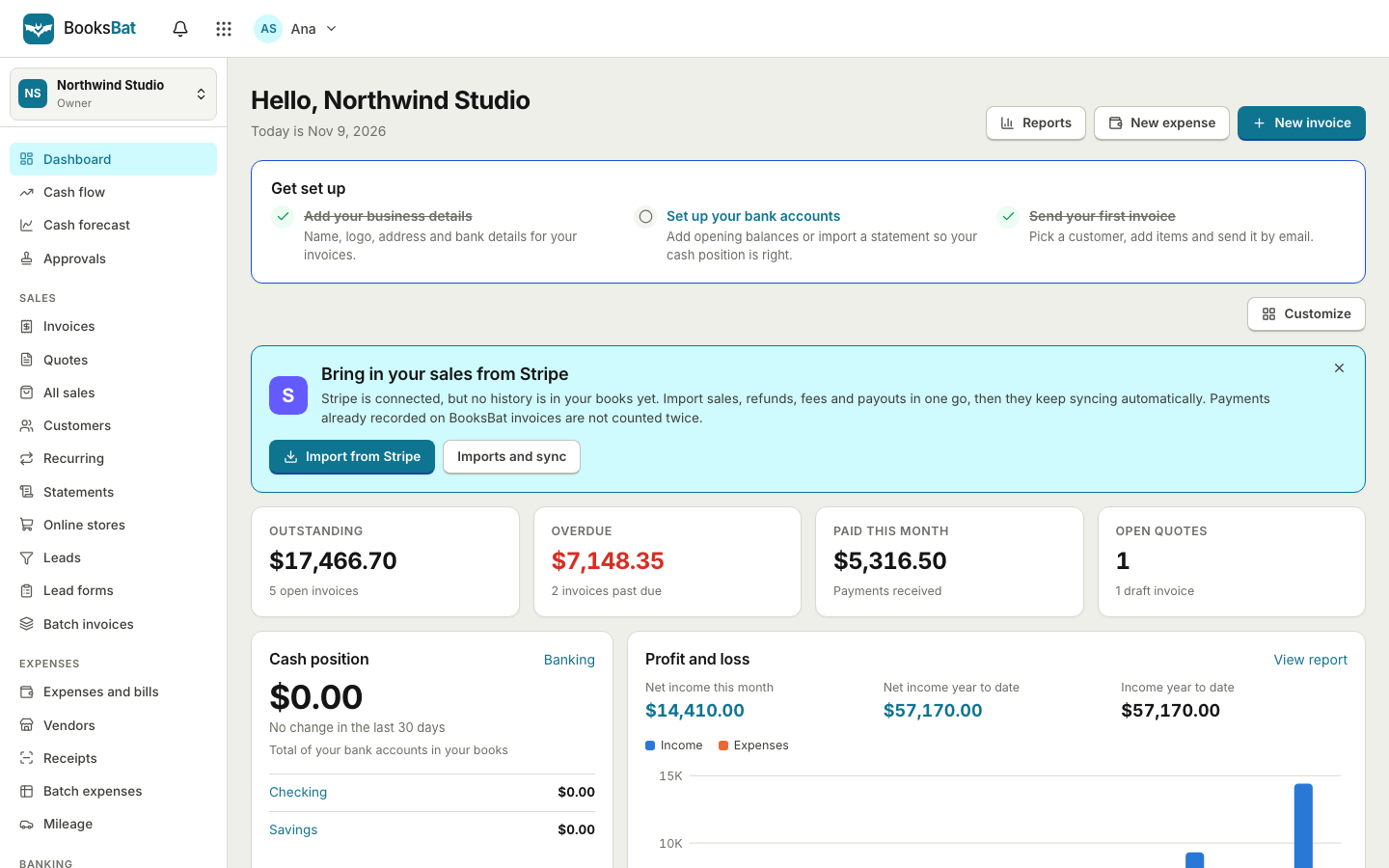
Your bank statement, checked against your books
Reconciling means comparing what your books say with what the bank says, and explaining every difference. It is how you catch a payment recorded twice, a fee nobody entered or a customer check that never cleared. Without it, your profit and loss and your balance sheet are just a guess.
BooksBat works from the statement files your bank already lets you download. Export a CSV, OFX, QFX or QBO file from online banking, import it into BooksBat, and every line lands in a review list. To be clear about what we do today: BooksBat does not connect to live bank feeds. You import your bank statements as files, as often as you like, and BooksBat skips lines it has already seen.
Why reconciling in BooksBat is quicker
Works with any bank
If your bank can export CSV, OFX, QFX or QBO, you can import it. Map the CSV columns once and BooksBat remembers them.
Match what you already recorded
Match an imported line to an invoice payment, expense, bill payment or transfer you already recorded, so nothing gets entered twice.
Bank rules do the routine
Tell BooksBat which account and payee a repeating line belongs to, and it categorizes matching lines for you on every import.
Transfers handled properly
Moving money between your own accounts or paying a credit card is recorded as a transfer, not as income or an expense.
Reconcile to the statement
Enter the statement ending balance, tick off cleared items and finish when the difference is zero.
A report for every reconciliation
Each finished reconciliation is saved with a report, and a discrepancy report shows what changed if a past one stops balancing.
From statement to reconciled in 3 steps
- 1
Import the statement
Download a statement file from your bank and upload it on bank transactions. Choose the account it belongs to.
- 2
Match or categorize
Match lines to what you already recorded, categorize the rest to an account and payee, and create bank rules for lines that repeat every month.
- 3
Reconcile
Open reconcile, enter the ending balance and date from your statement, tick the cleared items and finish when the difference is zero.
What banking in BooksBat includes
- Statement import
- Upload CSV, OFX, QFX and QBO files for bank and credit card accounts. Duplicate lines are detected and skipped.
- CSV column mapping
- Point BooksBat at the date, description and amount columns, including banks that use separate debit and credit columns.
- Review list
- New lines wait in a review list until you match or categorize them.
- Smart matching
- Match lines to payments, expenses, bill payments and transfers already in your books.
- Categorize
- Assign a line to an account with a payee and memo, and it posts to your ledger straight away.
- Bank rules
- Rules that set the account and payee for imported lines whose description matches text you choose.
- Transfers
- Record money moved between your own bank, savings and credit card accounts in one step.
- Reconciliation
- Reconcile any bank or credit card account against a statement balance, with running totals of cleared deposits and payments.
- Reconciliation reports
- A saved report for each finished reconciliation, plus a discrepancy report for items changed after they were reconciled.
- Unlimited bank accounts
- On Pro and Business, add as many bank, savings and credit card accounts as you need.
Why there are no live bank feeds yet
Many accounting tools pull transactions from your bank automatically. BooksBat does not do that today, and we would rather tell you up front. Instead you import your bank statements as files. For most small businesses that means a few minutes once a week or once a month, and it has a side benefit: you never hand your online banking login to a third party.
Because BooksBat remembers your column mapping and skips duplicates, a regular import is quick. Download the last few weeks, upload, review and you are done.
Tips for a clean reconciliation
Reconciliation is easiest when you do it every month, right after the statement arrives. A few habits help:
- Record customer payments as they come in, or let online payments record them for you, so the bank line has something to match.
- Enter bills when they arrive in expenses and bills, then match the bill payment when it clears.
- Create a bank rule the second time you see the same subscription or fee, so the third time it is already done.
- Never edit a reconciled transaction without a good reason. If you must, the discrepancy report shows exactly what changed.
Which plan includes banking?
The Free plan includes 2 bank or credit card accounts with statement import (CSV, OFX, QFX, QBO), the review list, matching and reconciliation. Pro at $4 a month adds bank rules, smarter matching and unlimited bank accounts. Business includes everything in Pro. See pricing for the full comparison, and bookkeeping for how bank activity reaches your ledger.
Frequently asked questions
Does BooksBat connect to my bank automatically?
No. BooksBat does not offer live bank feeds today. You download a statement file from your bank and import it. This keeps your banking login private.
Which file formats can I import?
CSV, OFX, QFX and QBO. Most banks and credit card providers offer at least one of these in their online banking download options.
What if I import the same statement twice?
BooksBat detects lines it has already imported and skips them, so overlapping date ranges are fine.
What is a bank rule?
A rule that categorizes imported lines for you. For example, any line containing the name of your phone company can go to the Telephone expense account with that company as the payee.
What happens if my reconciliation does not balance?
BooksBat shows the difference as you tick items. If an earlier reconciliation stops balancing because something changed, the discrepancy report lists the edited, deleted or added transactions.
Can I reconcile credit cards too?
Yes. Credit card accounts are imported and reconciled the same way as bank accounts.
Which plan do I need for reconciliation?
Any plan, including Free. Statement import and reconciliation are on every plan; bank rules and unlimited bank accounts come with Pro. See pricing.
Related features
BookkeepingDouble entry bookkeeping with a chart of accounts, journal entries and a ledger that fills itself from your invoices, payments and bills.Expenses and billsRecord expenses, checks and supplier bills, pay them on time, track vendors and purchase orders, and keep every receipt attached.Financial reportsProfit and loss, balance sheet, cash flow, trial balance, general ledger, aging and more, on a cash or accrual basis.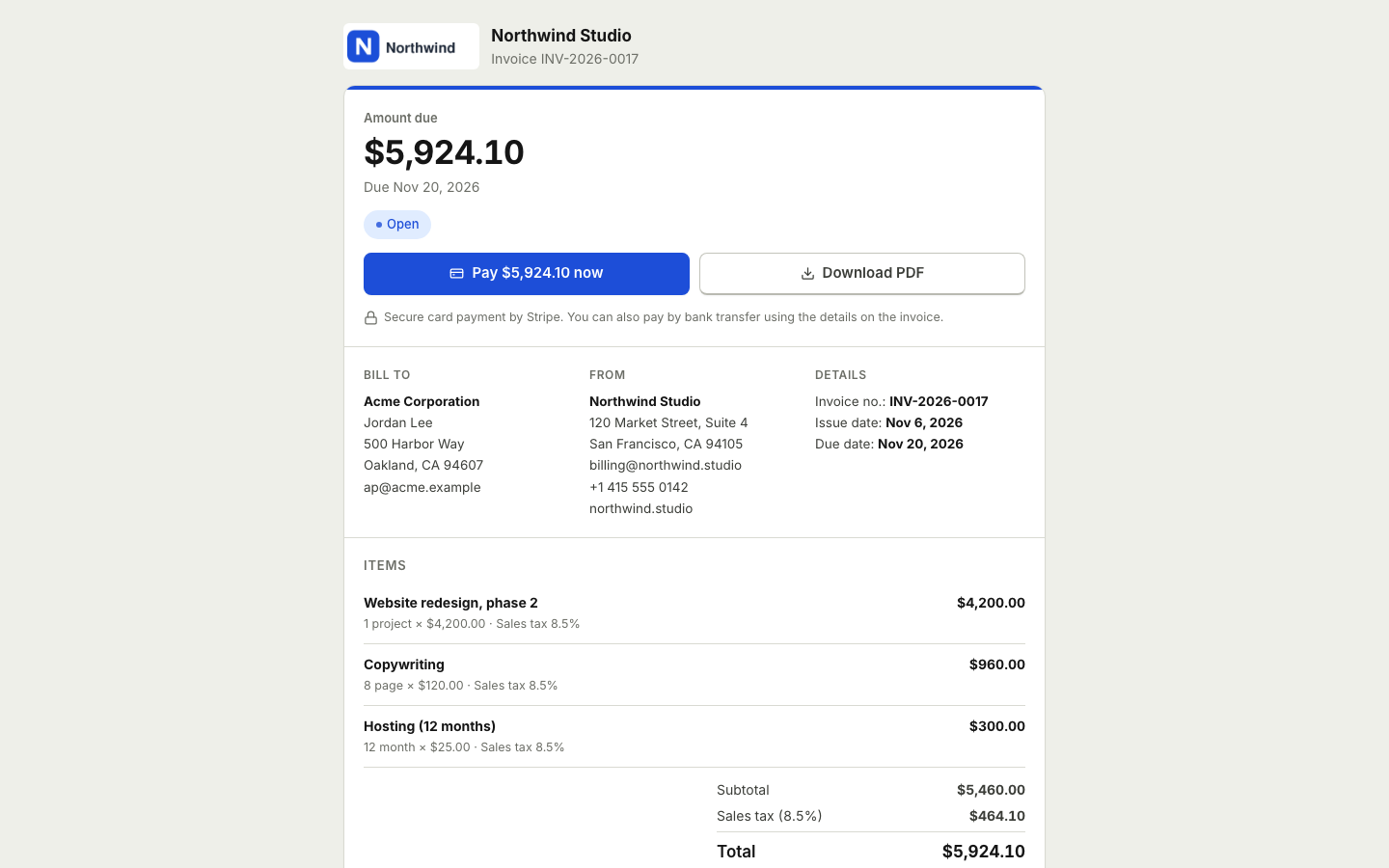 Online paymentsConnect your own Stripe, PayPal, Square, Razorpay, Mollie, GoCardless or Lemon Squeezy account. Clients pay online and the payment posts to your books.Multi currencyInvoice customers and pay suppliers in their currency while your books stay in your home currency, with exchange gains and losses recorded.
Know your books match the bank
Create a free account, import your first statement and reconcile it today. No credit card to start.