Track every expense and pay every bill on time
Record what you spend, enter supplier bills when they arrive and pay them before they are late. Vendors, purchase orders, vendor credits, recurring bills and receipts all live together, and everything posts to your books automatically.
- Expenses and bills on the free plan
- Receipts attached to entries
- Bills due list so nothing is late
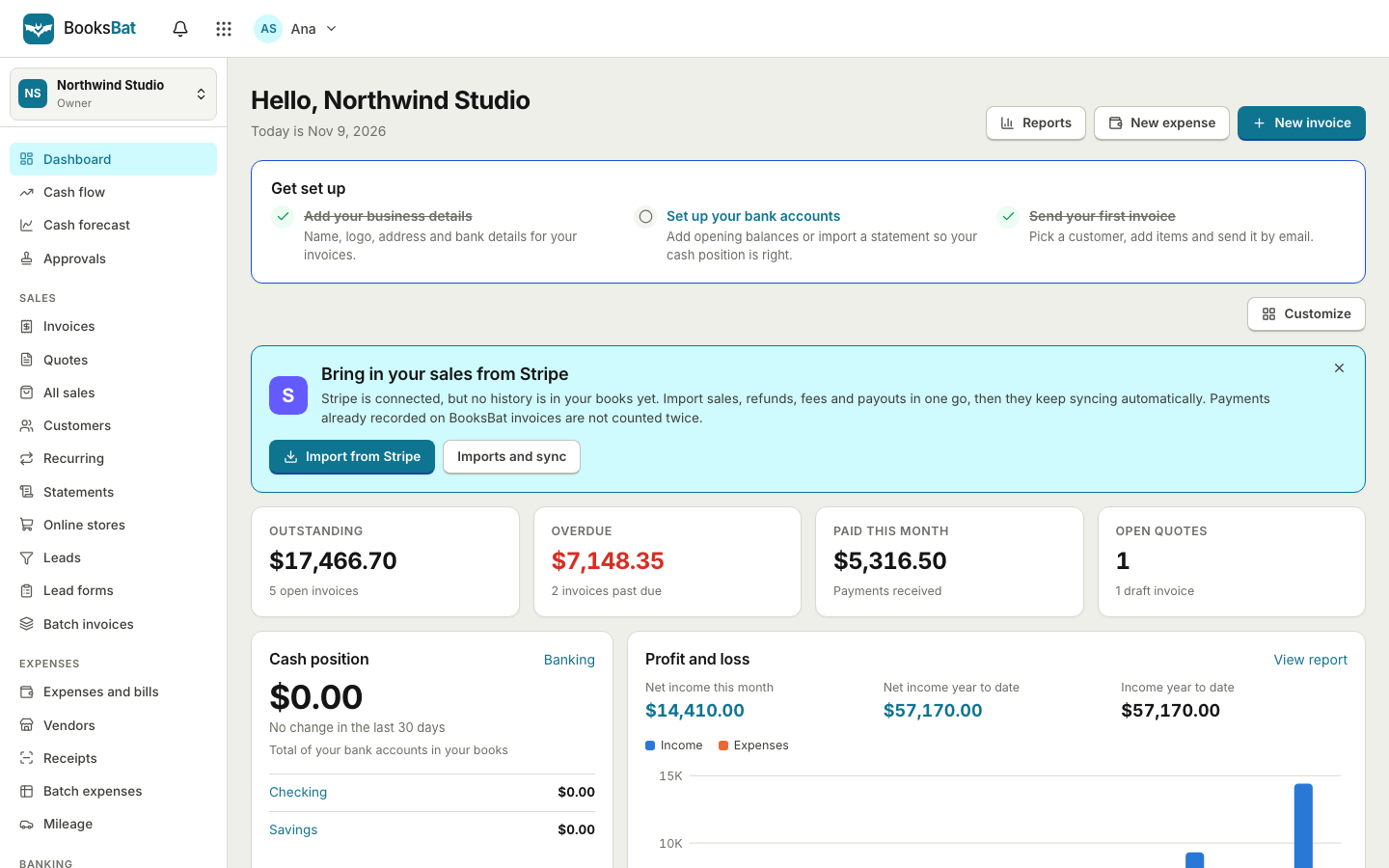
Know what you spend and what you owe
Money going out is half of your business, and it is the half that is easiest to lose track of. A fuel receipt in the car, a supplier invoice in your inbox, a software subscription on a card. BooksBat gives each of them a home so your profit is accurate and your tax deductions are backed up.
There are two kinds of spending. An expense or check is money that has already left your account. A bill is a supplier invoice you will pay later, so BooksBat records what you owe in accounts payable and reminds you when it is due. When you pay the bill, a bill payment clears it. Both post to the right expense accounts in your books.
Why business owners track spending in BooksBat
Every receipt kept
Upload a photo or PDF of a receipt and attach it to the expense or bill, so it is there when your accountant or a tax office asks.
Receipt scanning
Let BooksBat read the vendor, date, total and tax from a receipt and draft the expense for you to check. It uses AI credits.
Bills paid on time
See what is due this week and what is overdue, then record the payment when you pay.
Vendors in one place
Each vendor has contact details, default account, payment terms, open balance and a history of every bill and payment.
Recurring bills
Rent, insurance and subscriptions can be created on a schedule, so regular costs are never missed.
Bill customers for costs
Mark an expense as billable to a customer, add a markup and pull it onto their next invoice.
Get spending under control in 3 steps
- 1
Add your vendors
Create vendors as you go or import them from a CSV or Excel file on the import page.
- 2
Record expenses and bills
Enter an expense, check or bill on expenses and bills, choose the account and attach the receipt from receipts.
- 3
Pay and match
Pay bills when they are due, then match the payment to your imported bank statement during bank reconciliation.
Everything for money going out
- Expenses and checks
- Record card, cash and bank payments and printed or handwritten checks, split across several accounts if needed.
- Bills and bill payments
- Enter supplier bills with terms and due dates, then pay them fully or in part from any bank account.
- Vendors
- A vendor list with balances, terms, a default expense account and a full transaction history on the vendors page.
- Purchase orders
- Send purchase orders to suppliers and turn them into bills when the goods or invoice arrive. On Pro and Business.
- Vendor credits
- Record a credit or refund from a supplier and apply it against their next bill.
- Recurring bills
- Schedule regular bills to be created automatically. On Pro and Business.
- Billable expenses with markup
- Tag costs to a customer, apply a markup and add them to an invoice so you never forget to pass them on.
- Receipt upload
- Keep receipts as photos or PDFs and attach them to the matching expense or bill.
- Receipt scanning
- Scan a receipt to fill in the vendor, date, amount and tax. Uses AI credits, on Pro and Business.
- 1099 tracking
- Mark vendors as 1099 contractors and see what you paid them on the 1099 summary report. On Business.
Billable expenses, done right
If you buy materials or pay for travel on behalf of a customer, you should get that money back. When you record the expense, mark it billable and pick the customer. You can add a markup percentage to cover your time handling it.
Next time you create an invoice for that customer, BooksBat shows the open billable expenses so you can add them in a click. The cost stays in your expense account and the amount you charge appears as income, so your reports show the real margin.
Contractors and 1099s
If you pay independent contractors in the United States, you may need to send them a 1099 form. On the Business plan, mark a vendor as a 1099 contractor and BooksBat totals what you paid them in the year on the 1099 summary report. BooksBat does not file the forms for you. You or your accountant file them using the totals. See payroll and contractors.
What each plan includes
The Free plan includes expenses, vendors, bills and receipt upload. Pro at $4 a month adds purchase orders, recurring bills and receipt scanning with AI credits. Business at $12 a month adds 1099 contractor tracking, projects and inventory. Compare plans on the pricing page.
Frequently asked questions
What is the difference between an expense and a bill?
An expense or check records money that has already been paid. A bill records money you owe a supplier and will pay later, so it shows up in accounts payable and on your bills due list until you pay it.
Can I attach receipts?
Yes. Upload receipts as photos or PDFs and attach them to the expense or bill they belong to. Receipt upload is on every plan.
How does receipt scanning work?
Upload a receipt and BooksBat reads the vendor, date, total and tax to draft an expense for you to check before saving. Each scan uses AI credits and is available on Pro and Business.
Can I pay part of a bill?
Yes. Record a partial bill payment and the remaining balance stays open until it is paid.
Can I add my costs to a customer's invoice?
Yes. Mark the expense as billable to the customer, optionally add a markup, and add it to their next invoice.
Does BooksBat pay my suppliers for me?
No. BooksBat records bill payments that you make through your bank. It does not move money on your behalf.
Does BooksBat file 1099 forms?
No. On the Business plan it tracks payments to 1099 contractors and totals them on the 1099 summary report so you or your accountant can file.
Related features
BookkeepingDouble entry bookkeeping with a chart of accounts, journal entries and a ledger that fills itself from your invoices, payments and bills.Bank reconciliationImport bank statements as CSV, OFX, QFX or QBO, categorize or match each line with bank rules, then reconcile to the statement.Payroll and contractorsRecord paychecks with the wages, deductions and employer taxes you enter, track payroll liabilities and total 1099 contractor payments.Time tracking and projectsTrack hours with a timer or timesheet, bill them on invoices and see the income, costs and profit of every project.Financial reportsProfit and loss, balance sheet, cash flow, trial balance, general ledger, aging and more, on a cash or accrual basis.Sales taxSet up tax rates and agencies, charge combined or compound rates, see what you owe each period and record your tax payments.Start tracking expenses today
Create a free account and record your first expense in under a minute. No credit card, nothing to install.