Know what is in stock and what it really cost you
Keep your products and services in one catalog. For the items you stock, BooksBat tracks quantity on hand as you buy and sell, records cost of goods sold on every sale and warns you when it is time to reorder.
- Inventory on the Business plan
- Cost of goods sold posted for you
- Reorder alerts
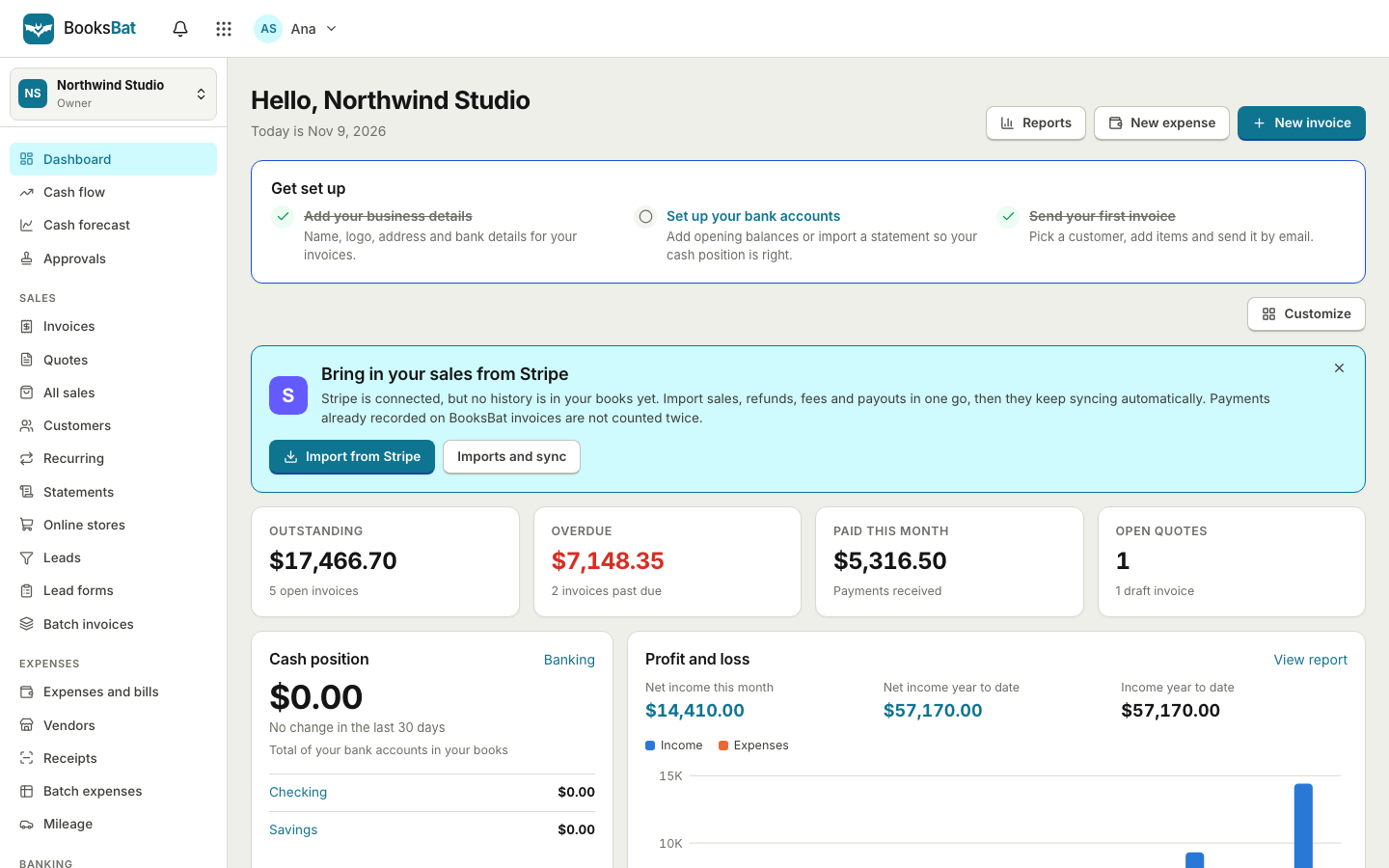
Stock counts and costs that follow every sale
If you sell physical products, two numbers matter more than most: how many you have, and what each one cost you. Get them wrong and you either run out of a best seller or think you are making more profit than you are. BooksBat keeps both up to date from the purchases and sales you already record.
Buy stock on a bill or expense and the quantity on hand goes up, with the cost added to your inventory asset. Sell it on an invoice or sales receipt and the quantity goes down, while BooksBat moves the cost of the units sold into cost of goods sold using first in, first out style costing. Your profit and loss shows gross profit you can trust, and your balance sheet shows what your stock is worth.
Why product businesses use BooksBat for inventory
Quantity on hand
Each inventory item shows how many you have now, updated as bills, invoices, sales receipts and adjustments are recorded.
Real cost of goods sold
The cost of each unit sold is posted to cost of goods sold automatically, so gross margin is accurate.
Reorder points
Set a reorder point per item and see which products are running low before a customer asks for one you do not have.
Bundles
Group items into a bundle, sell it as one line and BooksBat reduces the stock of each item inside it.
Inventory valuation
See the quantity, average cost and total value of your stock on any date with the inventory valuation report.
Product images
Add a photo to each product so your team picks the right one and your catalog is easy to scan.
Set up inventory in 3 steps
- 1
Add your products
Create items on products and services or import them from CSV or Excel, with price, cost, tax and an image.
- 2
Enter starting stock
Set the quantity on hand and value as of a start date, plus a reorder point for each item you want to watch.
- 3
Buy and sell as usual
Record purchases on bills and sales on invoices. Quantities, costs and reports update on their own.
What products and inventory include
- Products and services catalog
- Every item you sell with a name, SKU, description, price, income account and default tax.
- Service items
- Hourly or fixed price services for invoices, available on every plan.
- Non inventory items
- Things you buy and sell but do not count, such as small consumables.
- Inventory items
- Stocked products with quantity on hand, an inventory asset account and a cost of goods sold account.
- First in, first out style costing
- Each sale takes its cost from your earliest purchases still in stock.
- Quantity adjustments
- Correct stock after a count, damage or loss, with the value change posted to your books.
- Reorder points
- A low stock list of items at or below their reorder point.
- Bundles
- Sell several items together at one price while keeping each item's stock correct.
- Product images
- A picture on each product in the catalog.
- Inventory valuation report
- Stock value by item on any date, which should agree with the inventory asset on your balance sheet.
How inventory reaches your books
Inventory in BooksBat is part of your double entry bookkeeping, not a separate spreadsheet. Here is what happens:
- Buying stock on a bill or expense increases the inventory asset account instead of an expense. See expenses and bills.
- Selling stock on an invoice records the sale as income and moves the cost from inventory to cost of goods sold. See online invoicing.
- Adjusting stock after a count posts the difference to an inventory shrinkage or adjustment account.
- Reports such as profit and loss, balance sheet and inventory valuation all read from the same entries. See financial reports.
Is it right for my business?
BooksBat inventory suits small shops, makers, online sellers and trades that keep parts on hand and want accurate counts and costs inside their accounting. It tracks one stock quantity per item for the company. It is not a warehouse management system with bin locations, barcode scanning or manufacturing orders, so if you need those, you will want a dedicated tool alongside your books.
Which plan includes inventory?
Products, services and non inventory items are on every plan. Inventory items with quantity on hand, cost of goods sold, reorder points, bundles, product images and the inventory valuation report are on the Business plan at $12 a month. See pricing.
Frequently asked questions
Which plan do I need for inventory tracking?
The Business plan. Free and Pro include products, services and non inventory items, while quantity on hand, cost of goods sold, reorder points, bundles and product images are on Business. See pricing.
How is the cost of each sale worked out?
BooksBat uses first in, first out style costing: each unit sold takes its cost from the earliest purchases still in stock, and that cost is posted to cost of goods sold.
Can I import my product list?
Yes. Import products and services from a CSV or Excel file on the import page, including names, prices and descriptions.
Does inventory show on my balance sheet?
Yes. Stock you hold is an asset on the balance sheet, and the inventory valuation report shows how that value breaks down by item.
Does BooksBat support barcodes or several warehouses?
No. BooksBat tracks one quantity on hand per item for the company and does not offer barcode scanning or warehouse bins.
Can I sell a bundle of products?
Yes. Create a bundle from several items. It appears as one line on the invoice and reduces the stock of each item inside it.
Related features
BookkeepingDouble entry bookkeeping with a chart of accounts, journal entries and a ledger that fills itself from your invoices, payments and bills.Expenses and billsRecord expenses, checks and supplier bills, pay them on time, track vendors and purchase orders, and keep every receipt attached.Financial reportsProfit and loss, balance sheet, cash flow, trial balance, general ledger, aging and more, on a cash or accrual basis.Sales taxSet up tax rates and agencies, charge combined or compound rates, see what you owe each period and record your tax payments.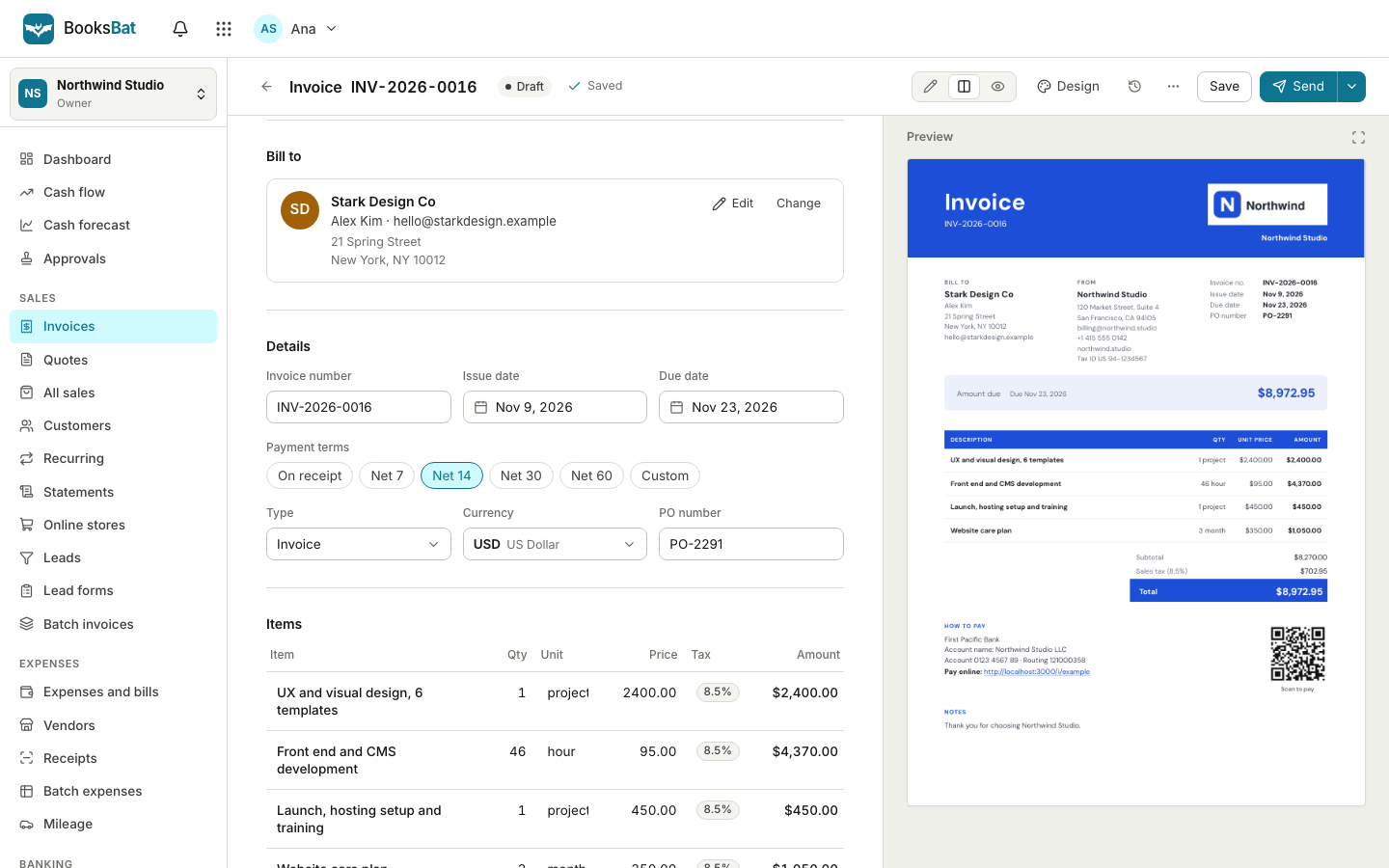 Online invoicingCreate professional invoices in minutes, email them with the PDF attached and let clients view and pay on a mobile friendly page.
Take control of your stock
Create a free account, add your products and upgrade to Business when you are ready to track quantities and costs.